

The hottest week in Paris’s history: inflatable clothes with built-in air conditioning
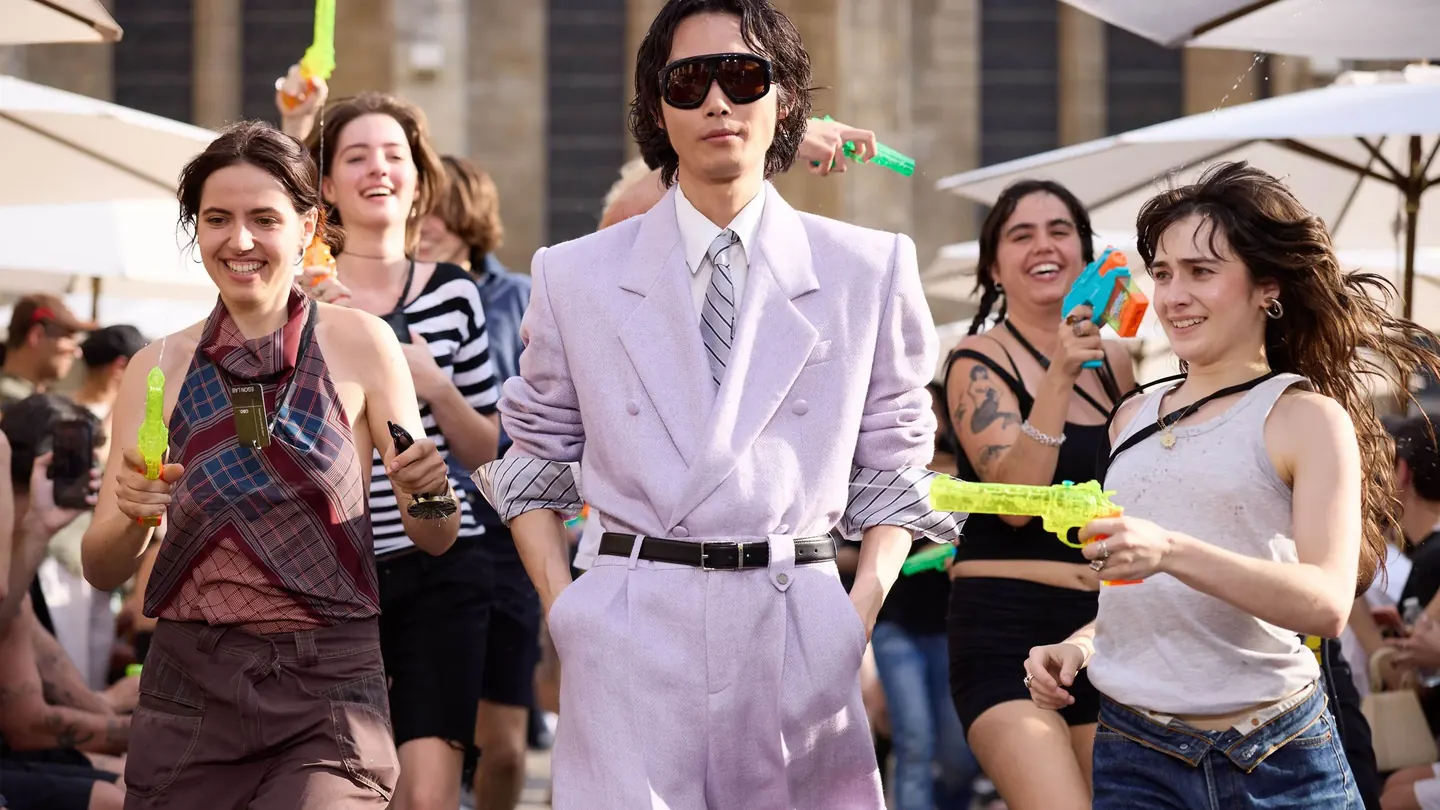
Guests were handed fans, face mists, Japanese kakigōri and water pistols. Some journalists moved into air-conditioned hotels; others simply left town.
Despite the punishing heat, the men’s season in Paris produced strong moments from both the major labels and younger names.
“This season demonstrated fashion’s extraordinary resilience. It showed a sense of solidarity within the ecosystem,” says Pascal Morand, executive president of the week’s organiser, the FHCM. The schedule from 23 to 28 June included 33 shows and 37 presentations, against 30 and 40 a season earlier. Several designers dropped out (Juun.J, KidSuper, Kartik Research, Creole), while Loewe moved to combined shows during women’s week, after Jack McCollough and Lazaro Hernandez took over creative direction.
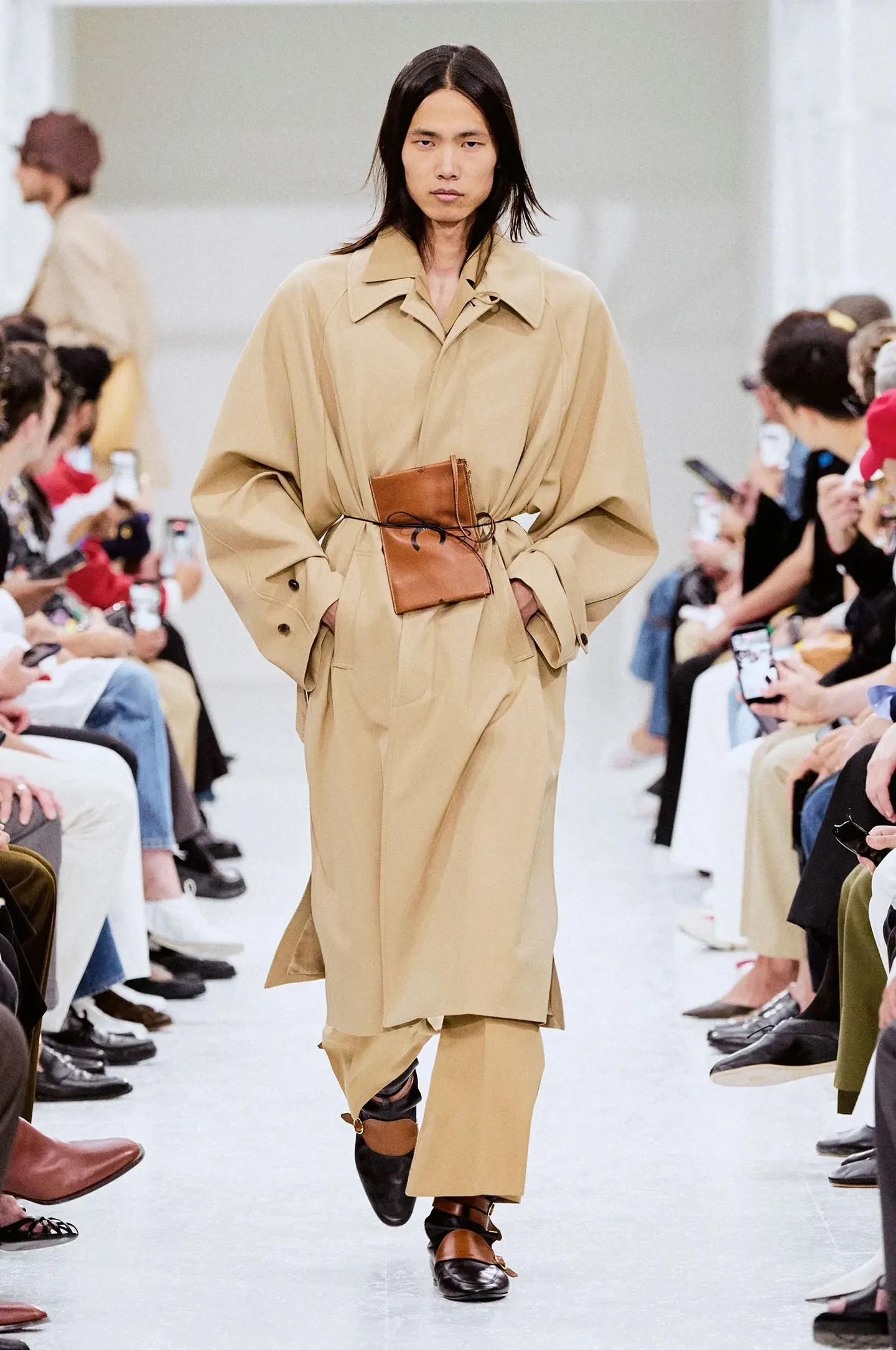
The main storyline was a new generation of creative directors who, having established their vision in the women’s collections, are now building it out in menswear. Michael Rider delivered a widely praised menswear debut for Celine: “A creative director who is both a designer and the leader of a team with a vision — Rider now looks entirely at home,” wrote Sarah Mower. Sarah Burton translated her precise cutting and couture sensibility into menswear in her first presentation for Givenchy. Julian Klausner’s lyrical, ultra-light collection for Dries Van Noten, his third as creative director, held the room even at 40 degrees. Lanvin creative director Peter Copping staged his first standalone menswear presentation on the official schedule. Hermès showed an in-house studio collection in a packed showroom — the audience is waiting for Grace Wales Bonner’s debut in January 2027.
Other highlights included a show from the 2025 LVMH Prize winner Soshiotsuki: after his January debut at Pitti Uomo, the Japanese designer Soshi Otsuki impressed with his first show on the Paris calendar, a collection about a 1980s Japanese office worker on his summer holidays.
“Paris men’s week has become the dominant global platform for menswear: the shows, presentations and multi-brand showrooms across the city are full of collections from all over the world,” says Bruce Pask, vice-president of men’s fashion at Saks Fifth Avenue and Neiman Marcus. “Covering it all is a daunting task, especially in this heat, but we get over a lot of ground.”
The heat itself became a storyline of its own. This was the hottest week in Paris’s history. The biggest brands had to move shows (Dior and Rick Owens) or change venues (Celine). Guests were served iced water, watermelon water (Lemaire), fruit ices (Dries Van Noten), kakigōri — the Japanese shaved-ice dessert with syrup (Kenzo Café) — and smoothies (the Balenciaga Boost pop-up). The gifts included fans, face mists (the Saint Laurent afterparty), cold wet towels and white parasols (Dior) and even water pistols at the show by Andam Grand Prize finalist EgonLab, whose team put them to use in the middle of the finale.
Some sets looked almost prophetic, though they had been conceived long before the heat. At Rick Owens, jets from fountains drenched the models on the runway and created a mercifully misty effect for guests — particularly those seated on the sun-drenched west side.
Louis Vuitton’s wave gave guests some respite but caused argument: while Parisians battled the heat, the spectacular construction struck part of the audience as detached from the moment — even though it had been conceived long before the temperatures were known. The house said the water, drawn from the city mains, would return to the sewer system in a closed loop, and that the sand would be given to the beach volleyball courts of the Cité Internationale Universitaire de Paris, where the show was held. A campus representative noted that Louis Vuitton’s sponsorship had helped fund an institution under growing financial pressure as state support shrinks.
The best-prepared guests arrived with personal fans — handheld mini versions or wearable neck coolers — and effervescent electrolyte tablets for hydration. Some Paris professionals moved out of their flats and into air-conditioned hotels. Others left the city altogether.
“This week put bigger things in perspective — for instance, the question of fashion’s role in a world where climate change is absolutely real,” says Jian DeLeon, men’s fashion director at Nordstrom. “There were designers who took it on directly, almost anticipating it.” Rick Owens, for one, showed inflatable pieces with built-in air conditioning as part of a collaboration with Adidas — the silhouette came out looking like the Michelin Man.
It is not only about inflatable jackets with built-in fans. Designers have turned to light fabrics, airy silhouettes and breathable materials — more relevant today than ever. “We are seeing a lot of technical innovation in lightweight materials that add a pleasant airiness: from the finest nylon to paper-weight suede and open-weave knitwear,” says Pask.