

£150 shorts: running labels have come to fashion week for the luxury shopper
Forty runners, sweaty from a run, turned up to breakfast at Dover Street Market. Then came the buyer meetings. That is how the running brand business works now.
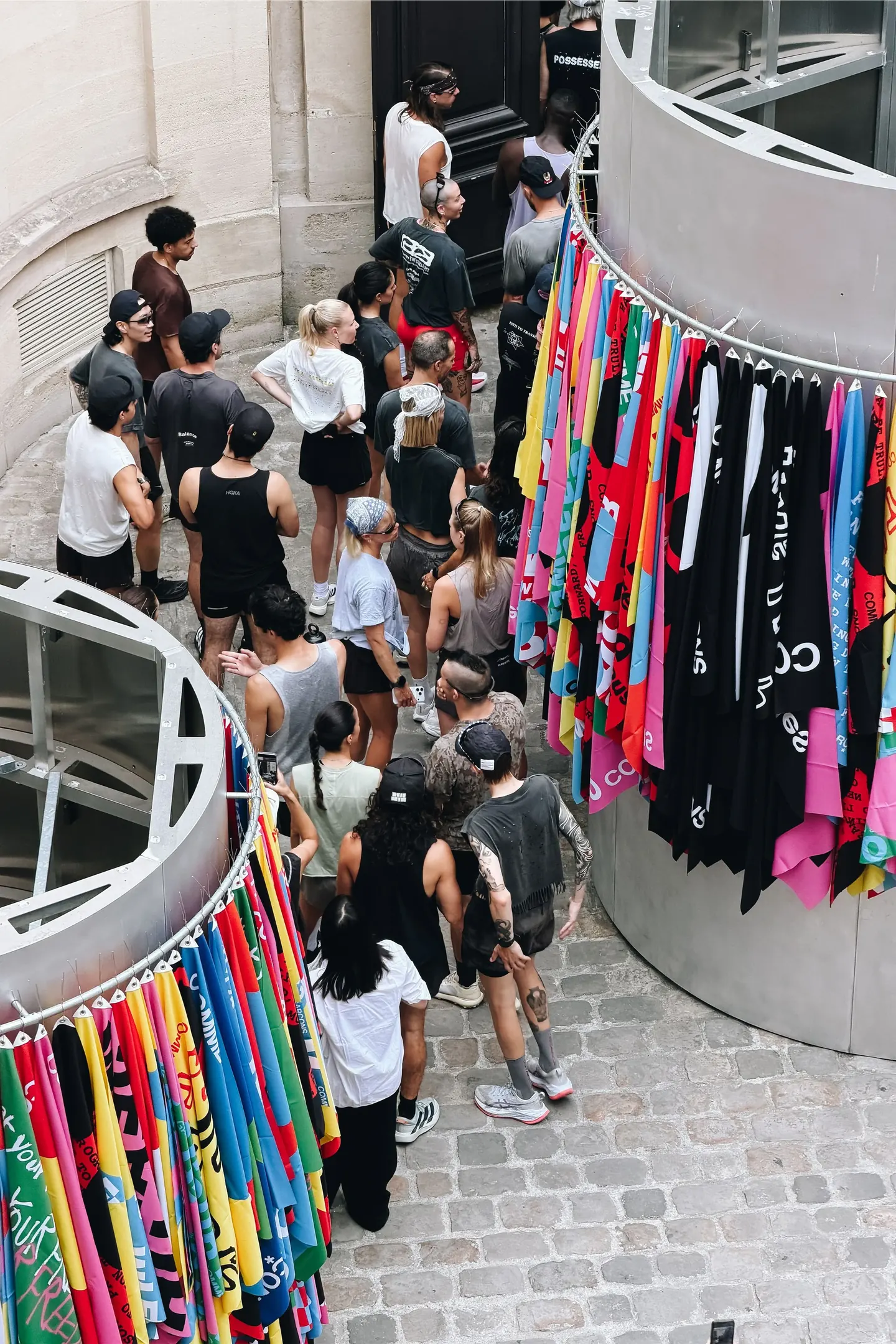
On the fourth day of men’s fashion week, some forty runners — sweaty from a run — arrived at the Rose Bakery inside Paris’s Dover Street Market. The invitation-only breakfast was hosted by the punk-inflected French label Satisfy. Straight afterwards came showroom meetings, where buyers placed orders for the spring/summer 2027 collection.
Two days earlier, the Los Angeles label District Vision had held evening drinks at its showroom in the Marais: guests from retailers such as Mr Porter were invited for informal networking, in a setting more relaxed than the usual sales meeting. Sports labels have not historically been part of the Paris Fashion Week landscape, but this is now increasingly common.
If marathon weekends have become a platform for client events, then Paris Fashion Week has turned into a luxury trade show for the running industry. Running brands used to sell almost exclusively into specialist sports shops — through local meetings or industry trade fairs such as The Running Event in Texas. Today, some of the biggest buyers of stylish performance labels are fashion retailers.
“It is the only place where 120 of our wholesale accounts show up, where all our sales agents reliably turn up, and where orders grow 30–40% season on season,” says District Vision co-founder Max Vallot.
Running has become a fashionable pursuit. Run clubs have been popularised as a sober way to socialise, and the marathon has gone from niche activity to status symbol. The global market for running apparel and footwear was valued at $23.3 billion in 2024 and, according to Custom Market Insights, will grow 9.2% a year to $51.6 billion by 2033. “We are a luxury retailer, but our sports category is on a consistently upward trajectory,” says Daniel Todd, head of buying at Mr Porter, which stocks District Vision, Satisfy, Norda and Literary Sport, known as “The Row of running”. “Footwear used to drive sport; now apparel is growing faster.”

The logic is clear: the lines between sportswear and lifestyle keep blurring. “We have always said that we make products for people who run, not for ‘runners’,” explains brand director Daniel Gros. “That naturally attracts a far wider audience.” Just as the Arc’teryx Beta jacket became an urban staple, today’s performance pieces do not always look sporty: District Vision’s collection includes lightweight merino sweaters with a soft collar, sold alongside precision hand-assembled sports eyewear from Japan.
There is still no dedicated trade show for stylish premium sports labels — hence Paris. Proximity to luxury is changing how brands present themselves, too: where running traditionally built itself on open community events, in Paris the invitations are closed and there is almost no running. Literary Sport held a morning walk with breakfast to launch a sandal on a Vibram sole, while On staged a dinner for 60 with a multi-course menu and a dessert of blown-sugar flowers, at a purpose-built spherical table echoing the brand’s logo. This is already the language of luxury hospitality.
Prices explain the rest. Literary Sport women’s cycling shorts cost £176, District Vision waffle tops £160, and Satisfy shorts start at £150. “Sport has traditionally been very tied to discounting,” says Todd. “When you put these labels next to luxury prices they are, of course, still expensive, but the price-to-value ratio is compelling.”
Wholesale partnerships with global fashion retailers give small brands customers, visibility, larger order volumes — and therefore better factory pricing — and often payment up front. “For the first seven years we would not have got in the door at some factories were it not for the large volumes the fashion retailers were buying,” says District Vision co-founder Tom Daly. The business remains predominantly direct — the label recently opened its first store in Los Angeles — but wholesale matters, particularly against a backdrop of tariffs on overseas shipments. “Wholesale feeds the commercial engine,” says Daly. And buyer feedback helps the brand hit the market: “We will always put our DTC customer first, but we reacted to buyer feedback very quickly and very hard, so we are now much closer to the market,” Vallot adds. “Better prices, better assortment: we expanded accessories as an entry price point at buyers’ request.”
At Satisfy the business splits 50-50 between direct sales and wholesale, and 70% of wholesale accounts are fashion stores. Over ten years the label has grown to €11 million in annual revenue, and in 2025 it raised €11 million in a Series B round led by the Chanel heir David Wertheimer. The plan is to become a €100 million company. The remaining 30% of wholesale accounts are independent running shops with a design bent: Knees Up in London, Handshake in Brussels, Metta Running House in Mexico City, Long Slow Distance in Los Angeles, Running Wylder in San Francisco. They are building stores that look more like a fashion concept store than a Sports Direct.
The buyer mix in Paris is changing too. This is no longer only about the big luxury chains: orders from small specialist shops give a brand credibility within the scene, while the large ones give it reach. “Our network of contacts has exploded since we started coming to Paris,” says Knees Up co-owner Matt Horrocks. “It is a melting pot of buyers and creatives.” For small European shops a trip to the US for TRE is too expensive, whereas Paris offers both affordable buying and introductions.
But caution is needed. Many brands, District Vision included, are more careful about order volumes from boutiques: enthusiasm for running does not equal a sustainable retail business, and having a community does not mean knowing how to sell to it. “It is a very young and interesting market, but not everyone delivers the sell-through and the payment reliability that a small brand like District Vision depends on,” says Vallot. “During Covid we thought we were going under… until Mr Porter paid for its orders in advance.”