

Chanel is growing again: Blazy’s jackets brought in buyers who had never bought the brand
Revenue of $19.3 billion, up 2%. Demand for the new bags and tweeds outran supply. “Which is right: otherwise everyone would turn up somewhere in the same jacket.”
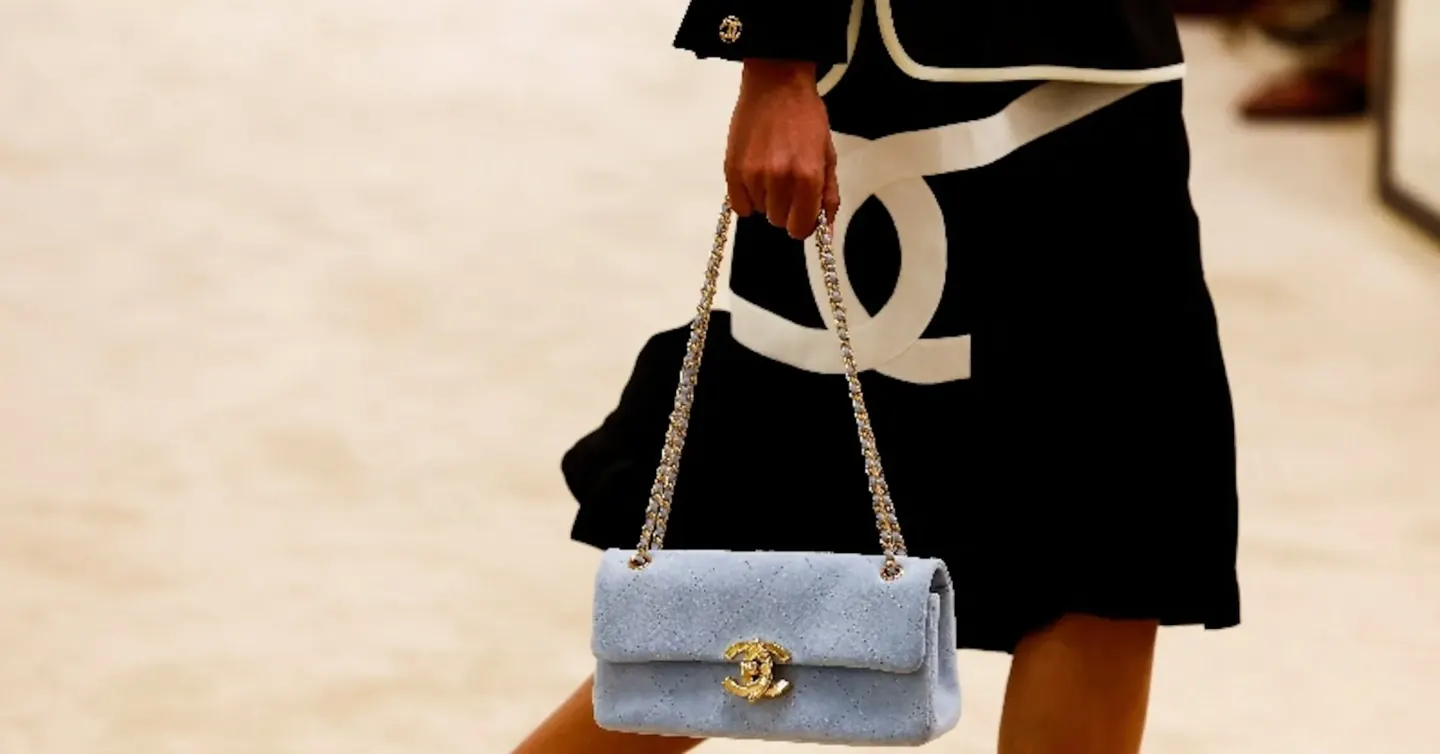
Chanel has drawn in customers who had never bought the brand before: Matthieu Blazy’s reworked classic bags, shoes and jackets created demand that outstripped supply and returned the house to growth.
The privately held company reported 2025 revenue up 2% at constant currency, to $19.3 billion. A year earlier revenue had fallen 4.3%, as even the very top labels ran into a ceiling of demand after steep price rises during the post-pandemic luxury boom.
Blazy, who succeeded Virginie Viard and showed his first collection in October, revived the house with pieces such as the $8,500 soft leather maxi flap bag and bright tweed jackets with frayed edges. “What we saw in 2025 was a creative surge across all our lines,” said chief executive Leena Nair, adding that the investments made in 2024 had laid the ground for the rebound in sales.
Operating profit rose 5% to $4.7 billion, against $4.5 billion in 2024 — still below 2021–2023 levels.
When Blazy’s first collection reached stores in March, customers rushed for the new bags, the $1,450 two-tone mint and black courts and the multicoloured tweed jackets. “The recruitment of new clients — people who had not bought Chanel before — has been phenomenal,” says Simon Longland, director of fashion buying at Harrods in London. “Demand far outstripped supply, and on certain special pieces that is right: yes, someone will be upset not to get the jacket they wanted, but if everyone who wanted one got one, they would all turn up somewhere in the same jacket.”
Against its competitors the picture is mixed: Hermès grew faster, up 9.8% to €16 billion, while LVMH’s fashion and leather goods division (which includes Louis Vuitton and Dior) fell 5% to €37.77 billion.
Despite Trump’s tariffs, the main growth came from the United States: sales in the Americas rose 7.2% at constant currency. Asia-Pacific, Chanel’s largest region, slipped 0.8%, while Europe added 2.5%. Prices went up 3% overall in 2025 and 2% on fashion goods; similar rises are planned this year, chief financial officer Philippe Blondiaux said. The Middle East, which accounts for around 4% of revenue, is holding up despite the war with Iran, he said. Having opened 41 stores last year, Chanel plans 30 this year, including nine fashion boutiques — among them Boca Raton in Florida and Palo Alto and San Diego in California.
Chanel’s success is a mixed signal for the market. “The bears — and our position currently leans that way — would say that with industry growth anaemic, Chanel’s revival is coming at its competitors’ expense,” Morgan Stanley analysts write. There is another reading. “I see it as a good indicator for luxury: Chanel is creating a buzz that hasn’t been there for several years,” says Harsharan Mann, portfolio manager at Aviva Investors. “Chanel’s success shows that luxury really is a supply-driven market: even in a tougher economy, new creativity can generate interest and sales.”
The mass market reacted instantly: copies have proliferated in recent months, from Zara’s $169 yellow-and-black checked jacket with tweed-effect fringing to H&M’s $59.99 cropped cream jacket with gold buttons “in the spirit of Chanel”.